
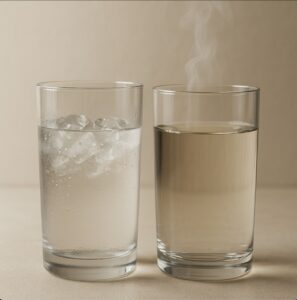
Cold water, Digestion and Traditional Chinese Medicine
In traditional Chinese medicine, water is regarded as the deepest reserve of vitality. It forms our body’s constitutional foundation, governs kidney function, and underlies all physiological transformation. Traditional medicine holds water in high regard for its life-sustaining role, yet it also recognises a clinical paradox: while water is essential for all physiological processes, consuming it cold can disrupt our body’s homeostasis. This tension between water’s physiological necessity and its disruptive potential reflects the sophisticated understanding in traditional medicine of the complex interplay between substance, temperature, and physiological function.
Classical Chinese Medicine Wisdom:
The classical Chinese medicine texts have long documented concerns about consumption of cold drinks/foods:
In “Shānghán Lùn”, it is stated: “Cold foods and drinks injure the spleen (pancreas), stomach and create cold in the intestines. This leads to stagnation of food and water and impedes the smooth flow of Qi and blood“.
In “Su Wen Chapter 38”, it is stated: “When cold beverages or food have entered the stomach and when [the cold] has followed the lung channel to ascend to the lung, then the lung is cold (resulting in respiratory symptoms) “.
In “Jin Kui Yao Lue”, it is stated: “Women’s diseases arise from deficiency, accumulated cold, and Qi stagnation, causing the disruption of the menstrual flow, lasting for years, with cold blood accumulation and cold injury to the uterine gate, leading to hardened channels“.
While classical texts discuss the effects of various types of “cold” including cold water and foods (including raw, uncooked, or unfermented food as well as foods which are considered cold in nature such as cucumber, yogurt,…) on the entire body, for the purposes of this blog, I’ll narrow my focus to cold water specifically, exploring what research reveals about its impact on digestion.
Modern Research:
Recent research has provided compelling evidence supporting traditional medicine’s concerns about cold water consumption. Mori et al. (2025) demonstrated that the infusion of cold water into the upper gastrointestinal tract led to suppression of normal gastric peristalsis (the regular, forward-propelling muscular contractions of the stomach). Instead of normal movement, cold water produced antiperistaltic contractions, meaning backward-moving waves that oppose the usual direction of digestive flow. The study suggests that cold temperature can actively alter motility patterns in the stomach and upper GI tract, possibly by acting on temperature-sensitive neural or muscular pathways (1).
Earlier research by Fujihira et al. (2019) showed that cold water significantly reduced gastric contraction frequency and delayed gastric emptying patterns (2).
Common symptoms that may indicate cold water sensitivity of the digestive system include:
- Immediate digestive discomfort: bloating, cramping, stomach pain, or sudden unexplained fatigue within minutes of consuming cold water.
- Delayed gastric emptying: feeling of fullness or food “sitting” in the stomach for extended time, reflux
- Reduced appetite: decreased desire to eat after consuming cold beverages
- Digestive sluggishness: slower overall digestive function and irregular bowl movement
You can imagine that these impacts can be exacerbated in individuals who already experience digestive conditions (e.g., indigestion, reflux, IBS, nausea etc.).
As with so many topics, there are varied claims about the effects of cold water on the body. While I recommend choosing warm water and cooked/fermented foods what matters most is how your body responds. Pay attention to your body: Does drinking cold water and raw food worsen your symptoms like migraines, period pain, digestive discomfort, persistent phlegm or cough? Does switching to warm water and cooked meals for 2-3 weeks help easing these symptoms?
Be mindful that the effects of our daily choices are both immediate and cumulative. While listening to our body’s signals is helpful for noticing short-term reactions, it may not always reveal the subtle impacts that develop gradually over time. That’s why I continue to recommend choosing warm water and cooked/warm/fermented food over cold: a consistent habit that offer both immediate and long-term support for overall wellbeing.
My recommendation on how to drink water: Drink warm water with a small pinch of Celtic salt added. To stay well hydrated, sip this mixture slowly throughout the day. When aiming to support a gentle flush, drink one or two glasses of warm water in a single sitting to promote urination.
“Nurture Digestion -> Enhance Absorption -> Strengthen Wellbeing“
References:
1- Mori, H., Yoshii, S., Kanesaka, T., Michida, T. & Ishihara, R. Antiperistaltic effect of cold water on upper gastrointestinal motility during endoscopic ultrasound. Am J Gastroenterol 120, 25 (2025). https://doi.org/10.14309/ajg.0000000000002807
2- Fujihira, K., Hamada, Y., Yanaoka, T., Yamamoto, R., Suzuki, K. & Miyashita, M. The effects of water temperature on gastric motility and energy intake in healthy young men. Eur. J. Nutr. 59, 103–109 (2019). https://doi.org/10.1007/s00394-018-1888-6
get in touch
Have any questions about Acupuncture and Moxibustion treatments? Sara is available to discuss your health concerns and treatment options.
Copyright © 2023- 2026 Acupuncture Moxa Melbourne – All Rights Reserved.